Masao Horiki
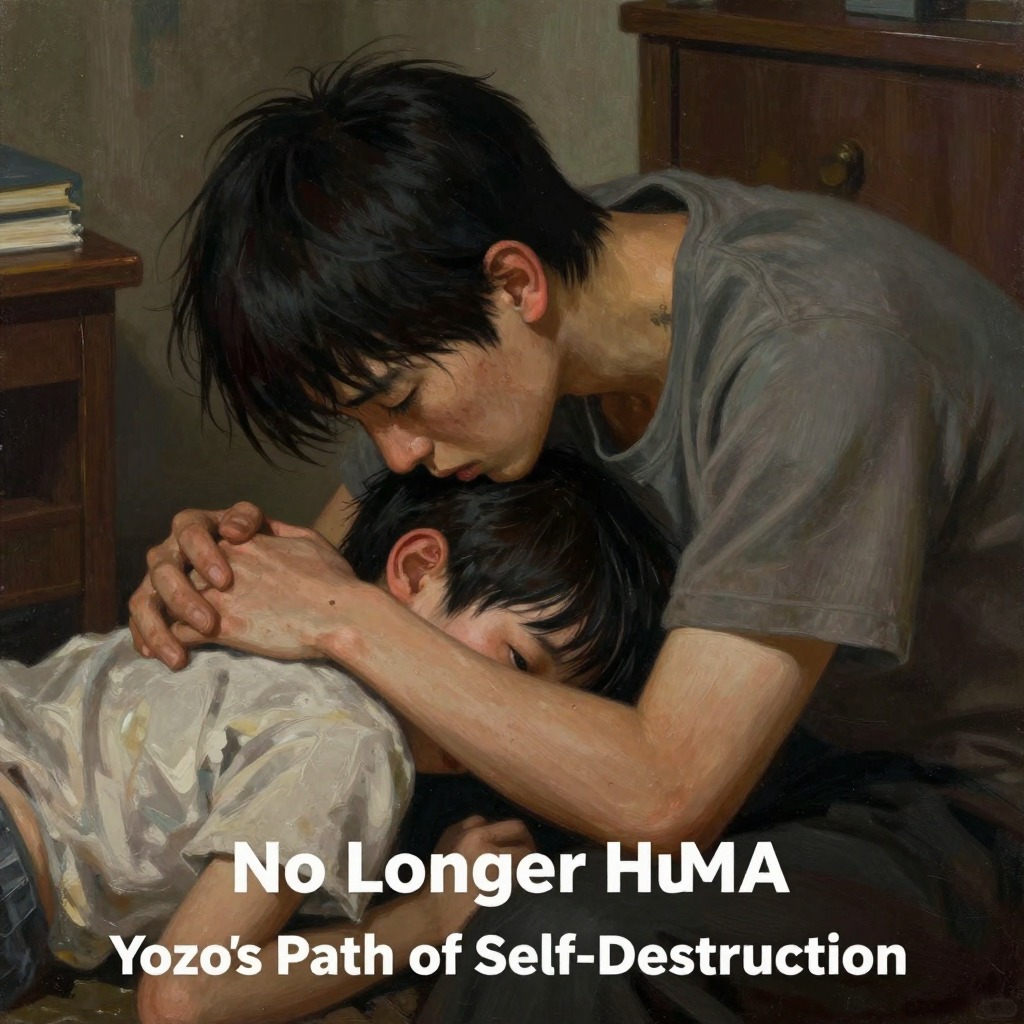
Masao Horiki is the cynical, parasitic art-student acquaintance who becomes Yozo's most constant companion in dissipation, a figure whose casual cruelty and self-serving friendship accelerate Yozo's descent into alcoholism, morphine addiction, and institutionalization. Horiki embodies the hollow, exploitative side of urban society that Yozo both craves and fears, and his presence marks every major turning point in Yozo's life—from his introduction to drink and prostitutes to the discovery of Yoshiko's violation and the final betrayal that lands Yozo in a mental hospital.
Identity and First Encounter
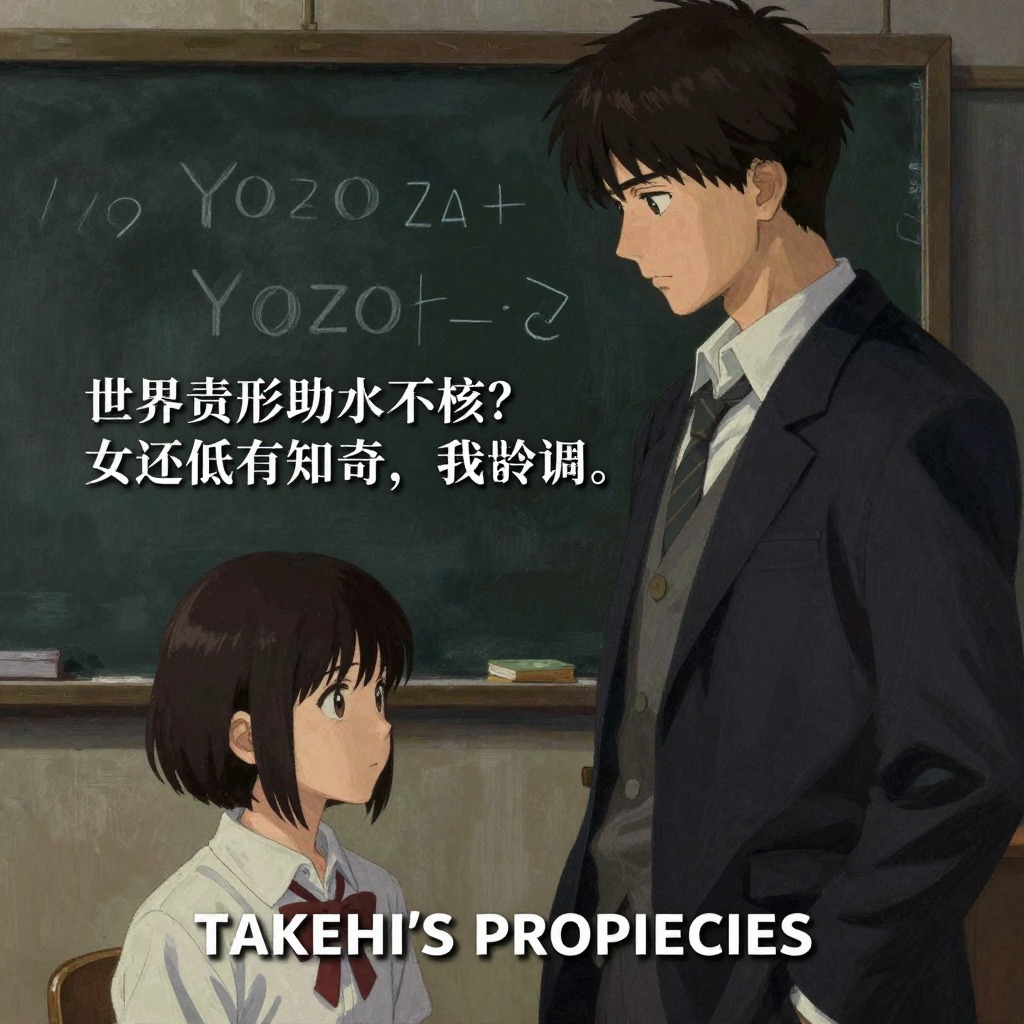
Horiki was born in downtown Tokyo, six years older than Yozo, and a graduate of a private art school who continued to attend an art class in Hongo, supposedly to study oil painting. He was swarthy but regular-featured, and unusually for an art student he always wore a neat suit and a conservative necktie, his hair pomaded and parted in the middle. Their acquaintance began when Horiki, barely known to Yozo by sight, suddenly asked to borrow five yen; Yozo, unable to refuse, gave him the money, and Horiki immediately dragged him to a café near the school, declaring the loan a pledge of friendship. Horiki's opening words to a waitress—calling Yozo a handsome boy and warning her not to fall for him—established the pattern of their relationship: Horiki would flatter, exploit, and subtly undermine Yozo from the very first moment.
Role as Guide to Tokyo's Underworld
Horiki served as Yozo's practical education in the city's pleasures and vices. He was a great bargainer who displayed unusual proficiency in spending minimal sums with maximum effect, using streetcars, buses, and steam launches to get wherever he wanted without taxis. He taught Yozo that stopping at a certain restaurant on the way home from a prostitute's for a bath with a meal was a cheap way to experience luxury, that beef with rice or skewered chicken from roadside stands were cheap but nourishing, and that nothing got you drunker quicker than brandy. Most importantly, Horiki handled all financial transactions, relieving Yozo of the paralyzing fear of paying bills that had made it impossible for him to navigate Tokyo alone. Horiki's endless, nonsensical chatter—completely uninterested in what his listener might be thinking—also saved Yozo from the frightful silences he dreaded, allowing him to merely nod and smile without having to perform his exhausting clowning.
The Friendship of Mutual Contempt
Despite their constant companionship, the relationship was built on mutual contempt. Yozo despised Horiki as a fool whose paintings were rubbish, a genuine city good-for-nothing who operated without consciousness of his own farcicality or the misery of it. Yet Yozo also felt that Horiki, like himself, was entirely removed from the activities of normal human beings—they were of one species in being disoriented, though Horiki lacked Yozo's self-awareness. Horiki, for his part, never treated Yozo as a full human being, considering him only as the living corpse of a would-be suicide, a person dead to shame, an idiot ghost whose only purpose was to further Horiki's own pleasures. This became explicit during their drunken antonym game on the roof, when Horiki sneered that he had never been tied up like a common criminal the way Yozo had, and later declared that the antonym of crime was "the law," his face taking on the somber dignity of a relentless prosecutor.
The Catalyst of Disaster
Horiki's presence directly precipitated Yozo's most catastrophic moments. It was Horiki who, to show off his modernity, took Yozo to a secret Communist meeting, introducing him to the "Reading Society" that would later consume Yozo's time and energy. It was Horiki who, after a night of drinking, insisted on going to the Ginza café where Tsuneko worked, and then refused to kiss her because she looked too poverty-stricken—a rejection that paradoxically awakened Yozo's first genuine feeling of love and led directly to their suicide pact. Most devastatingly, it was Horiki who, during a summer evening party on the roof, deliberately pointed out through a window that Yoshiko was being violated by the shopkeeper, then noisily cleared his throat to announce his presence before returning to inform Yozo. Afterward, Horiki declared the apartment "a perfect hell" and said he would not be coming back, adding with cruel condescension that Yozo should forgive Yoshiko because "you're not much of a prize yourself."
The Final Betrayal
Years later, when Yozo had sunk into morphine addiction and was planning to kill himself with ten shots in a single night, Horiki appeared with Flatfish, having seemingly sniffed out Yozo's intention with diabolical intuition. This time Horiki wore a gentle smile the like of which Yozo had never before seen on his face, and said softly, "I hear you've coughed blood." Yozo, completely shattered by that one gentle smile, averted his face and wept, then obediently got into the car that took him to the mental hospital. The smile was the final deception: Horiki's apparent kindness was merely the most effective trap, and Yozo, forgetting both prudence and resistance, allowed himself to be bundled away, forever branded as a madman. Horiki thus completed his role as the bird of ill-omen who flapped back into Yozo's life whenever he began to hope, ripping open the wounds of memory with his beak.
Narrative Significance
Horiki functions as Yozo's dark double and the embodiment of society's hypocrisy. Where Yozo dreads human beings and performs clowning out of desperate fear, Horiki operates without self-doubt, using people for his own amusement while maintaining the appearance of a benefactor. He is the one who articulates the threat of "society"—"Society won't stand for it"—prompting Yozo's crucial realization that "society" is merely an individual, a then-and-there contest. Yet Horiki also represents the inescapable pull of degradation: Yozo knows that when the two of them meet face to face, they immediately metamorphose into dogs of the same shape and pelt, bounding through the streets together. Horiki is the friend who costs nothing, who borrows five yen and never repays, who lectures Yozo on morality while exploiting him, and who ultimately delivers Yozo to the asylum with a smile. He is, in Yozo's own formulation, the antonym of crime—not God, not virtue, but the law itself, the relentless prosecutor who judges and condemns while remaining safely outside the cage.